Buying Property in France: The Complete Decision Guide
A structured route from search and offer through diagnostics, preliminary contract, notaire checks, copropriété evidence and completion.
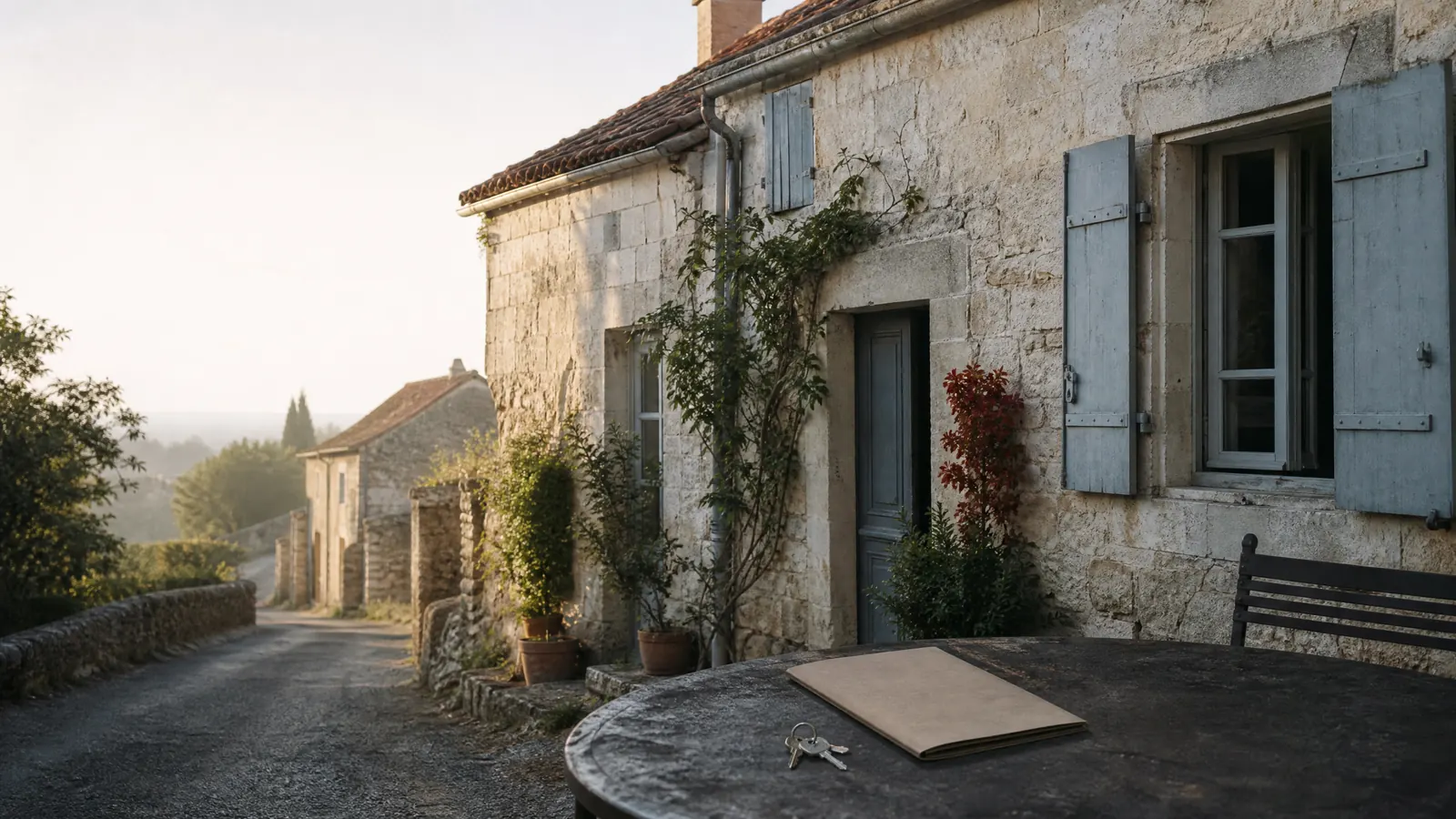
# Buying Property in France: The Complete Decision Guide
Purpose Statement This flagship guide provides a comprehensive, decision-focused pathway for purchasing property in France. It is designed to help prospective buyers navigate the complexities of the French real estate market, from initial property search and making an offer to understanding preliminary contracts, diagnostics, the notaire process, and the rules of *copropriété*. Grounded in authoritative primary sources, this guide equips you with the knowledge to mitigate risks and make informed decisions.
The Six-to-Eight-Step Decision Pathway
Step 1: Define Your Project and Secure Financing Before searching for a property, clearly define your objectives (location, type of property, budget) and assess your financing options. If you require a mortgage, obtain an agreement in principle from a bank. This step is crucial for establishing a realistic budget and demonstrating your seriousness to sellers [S1].
When defining your project, consider the long-term implications of your chosen location. Urban areas may offer better rental yields and capital appreciation, while rural properties might provide a quieter lifestyle but could be harder to sell later. Your budget should not only account for the purchase price but also for acquisition costs, which include notaire fees, registration taxes, and potential agency fees. These additional costs can add significantly to your total outlay, often amounting to 7-8% for older properties and 2-3% for new builds [S10].
Securing financing early is a critical step. French banks typically require a deposit of at least 10-20% of the purchase price, plus enough to cover the acquisition costs. They will also assess your debt-to-income ratio, which generally should not exceed 35%. Having a pre-approval or agreement in principle (*accord de principe*) from a lender will make your offer much more attractive to sellers, as it reduces the risk of the transaction falling through due to financing issues.
Step 2: Property Search and Viewings Engage in property viewings, paying close attention to the condition of the property, the surrounding environment, and any potential urban planning constraints. For properties in a *copropriété* (co-ownership), review the maintenance log (*carnet d'entretien*) and recent general assembly minutes to assess the building's condition and upcoming expenses [S2].
During viewings, look beyond the aesthetics. Check for signs of damp, structural issues, and the condition of the roof and windows. Ask about the heating system, insulation, and the age of the electrical and plumbing installations. If you are considering a property in a rural area, inquire about the sanitation system (e.g., septic tank), as non-compliant systems generally must be upgraded within a year of purchase.
For apartments or properties within a *copropriété*, the financial health of the co-ownership is just as important as the condition of the individual unit. Request the *pré-état daté*, a document provided by the syndic (managing agent) that details the financial situation of the co-ownership and the specific lot you are buying. Pay close attention to any planned major works, such as roof repairs or facade renovations, as you will be liable for your share of these costs once you become an owner [S2].
Step 3: Making an Offer (*Offre d'Achat*) Once you find a suitable property, you can make a formal offer to purchase (*offre d'achat*). This document outlines your proposed price and conditions. If the seller accepts the offer in writing, both parties are generally committed to proceeding to the preliminary contract stage. However, as a buyer, you retain a right of withdrawal later in the process [S3].
Your offer should be in writing and include a time limit for the seller's response, typically one to two weeks. It should also specify any conditions attached to the offer, such as obtaining a mortgage or the sale of an existing property. If the seller accepts your offer without modifications, a preliminary agreement is formed. If they make a counter-offer, your original offer becomes void, and you can choose to accept, reject, or negotiate the new terms.
It is important to note that an accepted offer binds the seller more firmly than the buyer. While the seller cannot withdraw once they have accepted, the buyer still benefits from a statutory 10-day cooling-off period after signing the preliminary contract. During this time, the buyer can withdraw from the transaction without providing a reason and without financial penalty.
Step 4: Reviewing Diagnostics and Disclosures The seller is required to provide a Technical Diagnostic File (*Dossier de Diagnostic Technique* - DDT). This file includes essential reports such as the Energy Performance Certificate (DPE), asbestos and lead risk assessments, and electrical/gas installation checks. Review these carefully, as they highlight potential risks and future costs [S4].
The DDT is a crucial part of your due diligence. The Energy Performance Certificate (DPE) rates the property's energy efficiency and greenhouse gas emissions on a scale from A to G. Properties with poor ratings (F or G) may be subject to rental restrictions and will likely require significant investment to improve their energy efficiency.
Other diagnostics include checks for asbestos (for properties built before July 1997), lead paint (for properties built before 1949), termites (in designated risk areas), and the condition of the electrical and gas installations if they are over 15 years old. Additionally, an *État des Risques et Pollutions* (ERP) will inform you of any natural, mining, or technological risks affecting the property, such as flood zones or seismic activity. Reviewing these documents thoroughly will help you anticipate future maintenance costs and negotiate the purchase price if significant issues are identified [S4].
Step 5: Signing the Preliminary Contract (*Avant-Contrat*) The preliminary contract, typically a *Compromis de Vente* (mutual agreement) or a *Promesse Unilatérale de Vente* (unilateral promise), formalizes the transaction. It details the property, price, conditions precedent (*conditions suspensives* - e.g., obtaining a mortgage), and the target date for the final sale. Upon signing, you usually pay a deposit (typically 5-10% of the purchase price) [S5]. You have a statutory 10-day cooling-off period during which you can withdraw without penalty [S6].
The *Compromis de Vente* is a bilateral agreement where both parties commit to the transaction. The *Promesse Unilatérale de Vente* is a unilateral promise by the seller to sell the property to the buyer at an agreed price, giving the buyer an exclusive option to purchase within a specified timeframe. Both contracts are legally binding and should be drafted or reviewed by a notaire to ensure your interests are protected.
A critical element of the preliminary contract is the inclusion of *conditions suspensives* (conditions precedent). The most common is the condition of obtaining a mortgage. If you are unable to secure financing under the terms specified in the contract (e.g., amount, interest rate, duration), the contract is voided, and your deposit is returned. Other conditions might include obtaining planning permission for an extension or the sale of another property. Ensure these clauses are drafted precisely to avoid disputes later.
Step 6: The Notaire Process and Due Diligence The *notaire* (a public official representing the State) plays a central role in French property transactions. They conduct detailed legal and administrative checks, verifying title deeds, urban planning rules, and pre-emption rights. The notaire ensures the transaction complies with all legal requirements and collects the necessary taxes and fees [S7].
The notaire's role is impartial; they do not represent either the buyer or the seller but act on behalf of the State to ensure the transaction's legality. However, you have the right to appoint your own notaire to work alongside the seller's notaire at no extra cost, as the fees are shared between them. This can provide an additional layer of reassurance, especially if you are unfamiliar with the French legal system.
During the period between the preliminary contract and the final deed of sale (usually 2 to 3 months), the notaire will conduct extensive due diligence. This includes verifying the seller's title, checking for any mortgages or liens on the property, and requesting urban planning certificates from the local town hall (*mairie*). They will also purge any pre-emption rights (*droits de préemption*), which allow local authorities or tenants to purchase the property in priority over you [S7].
Step 7: Final Walkthrough and Signing the Deed of Sale (*Acte de Vente*) Before signing the final deed, conduct a final walkthrough of the property to ensure it is in the agreed-upon condition and vacant (unless sold tenanted). The *Acte de Vente* is signed before the notaire, finalizing the transfer of ownership. You must pay the remaining balance of the purchase price, the notaire's fees, and any apportioned property taxes [S8].
The final walkthrough is your last opportunity to verify that the property has not been damaged since your initial viewing and that all fixtures and fittings included in the sale are still present. If you discover any issues, you should raise them with the notaire before signing the deed. The notaire may withhold a portion of the purchase price until the issues are resolved.
The signing of the *Acte de Vente* typically takes place at the notaire's office. The notaire will read the deed aloud, explaining its contents and answering any final questions. Once signed by all parties, you will receive the keys and an attestation of ownership (*attestation de propriété*), which serves as proof of your purchase until the final title deed is registered and issued, a process that can take several months.
Step 8: Post-Sale Formalities and *Copropriété* Integration After the sale, the notaire registers the transaction with the land registry (*publicité foncière*). If you purchased a property in a *copropriété*, you must familiarize yourself with the co-ownership rules (*règlement de copropriété*) and your obligations regarding communal charges and participation in general assemblies [S9].
Post-sale, you will need to set up utility accounts (electricity, gas, water) in your name and arrange for home insurance, which is generally required in France. If the property is your primary residence, you will be liable for the *Taxe d'Habitation* (though this is being phased out for most households) and the *Taxe Foncière* (property tax), which is paid by the owner of the property on January 1st of each year. The notaire will usually apportion the *Taxe Foncière* between the buyer and seller for the year of the sale.
For properties in a *copropriété*, active participation in the co-ownership is essential. Attend the annual general assemblies (*assemblées générales*) to vote on the budget, approve the accounts, and decide on any major works. Understanding the *règlement de copropriété* will help you navigate the rules regarding the use of private and common areas, ensuring a harmonious living environment with your neighbors [S9].
Key Decisions and Verification
| Decision / Action | Who Verifies / Executes | Key Considerations |
|---|---|---|
| Financing Approval | Bank / Mortgage Broker | Ensure conditions precedent in the preliminary contract align with your financing timeline. |
| Property Condition & Diagnostics | Certified Diagnostician / Buyer | Review the DDT carefully for asbestos, lead, energy efficiency (DPE), and structural risks. |
| Urban Planning & Servitudes | Notaire / Local Town Hall (*Mairie*) | Verify zoning rules, future developments, and any easements affecting the property. |
| Preliminary Contract Terms | Notaire / Legal Advisor | Ensure all conditions suspensives (e.g., mortgage approval) are clearly defined to protect your deposit. |
| Title and Ownership Verification | Notaire | The notaire guarantees the seller has the legal right to sell and that the property is free of undisclosed encumbrances. |
| ***Copropriété* Financial Health** | Buyer / Notaire | Review the *état daté* (financial statement) to understand current charges, pending works, and any debts of the co-ownership. |
Common Failure Modes
- **Ignoring the *Copropriété* Documents:** Failing to review the general assembly minutes and the *carnet d'entretien* can lead to unexpected financial liabilities for major building repairs (e.g., roof replacement, facade renovation).
- Misunderstanding the Cooling-Off Period: The 10-day cooling-off period starts the day after the preliminary contract and all required annexes (including the DDT and *copropriété* documents) are formally presented to the buyer. Withdrawing after this period without a valid condition precedent results in the loss of the deposit.
- Underestimating Acquisition Costs: Buyers often fail to account for the "notaire's fees" (primarily state taxes), which add approximately 7-8% to the purchase price for older properties and 2-3% for new builds [S10].
- Inadequate Financing Clauses: If the condition precedent for obtaining a mortgage is poorly drafted (e.g., unrealistic interest rate or timeline), the buyer may be forced to proceed or lose their deposit if financing falls through.
- Overlooking Urban Planning Constraints: Purchasing a property with the intent to extend or renovate without verifying local urban planning rules (*Plan Local d'Urbanisme* - PLU) can result in denied building permits.
Professional Boundaries
This guide provides general informational guidance on the French property purchasing process. It does not constitute legal, financial, or tax advice. Property transactions in France are subject to complex and evolving regulations. Prospective buyers must consult with a qualified *notaire*, legal advisor, or tax professional to address their specific circumstances and ensure compliance with all legal requirements.
Suggested Internal-Link Topics
- Navigating the French Mortgage System
- Understanding the *Taxe Foncière* and *Taxe d'Habitation*
- The Role of the *Notaire* in French Law
- Renovating Property in France: Permits and Regulations
- A Guide to French Inheritance Law for Property Owners
Verified primary sources
- S1Notaires de France. "Parcours immobilier d'achat ou de vente."
Notaires de France
- S2Service-Public.fr. "Achat d'un logement en copropriété."
Service-Public.fr
- S3
- S4
- S5
- S6Service-Public.fr. "Acte de vente d'un logement existant."
Service-Public.fr
- S7Notaires de France. "Buying a property."
Notaires de France
- S8Service-Public.fr. "Achat ou vente d'un logement."
Service-Public.fr
- S9Notaires de France. "Co-ownership, your rights, and obligations."
Notaires de France
- S10Notaires de France. "Cost of buying a house : Conveyancing fees."
Notaires de France